
Tech
Agentic AI, orchestration to shape future of customer experience in West Africa

Customer experience in Nigeria and across West Africa is entering a new phase as businesses increasingly adopt artificial intelligence to improve customer interactions.
Organisations are moving beyond basic automation towards systems that can understand customer needs, retain information across communication channels and coordinate actions to resolve complaints and service requests.
The shift comes amid the rapid expansion of digital services in Nigeria. The Nigerian Communications Commission (NCC) recorded 177.4 million active mobile subscriptions and 144.8 million active internet subscriptions in November 2025, highlighting the growing scale of the country’s digital environment.
Consumers now interact with banks, telecommunications companies, retailers and other service providers through mobile applications, messaging platforms, websites, call centres and physical outlets.
However, these interactions are often fragmented. Customers frequently have to repeat information when switching between channels or when moving from automated systems to human agents, without having their complaints resolved.
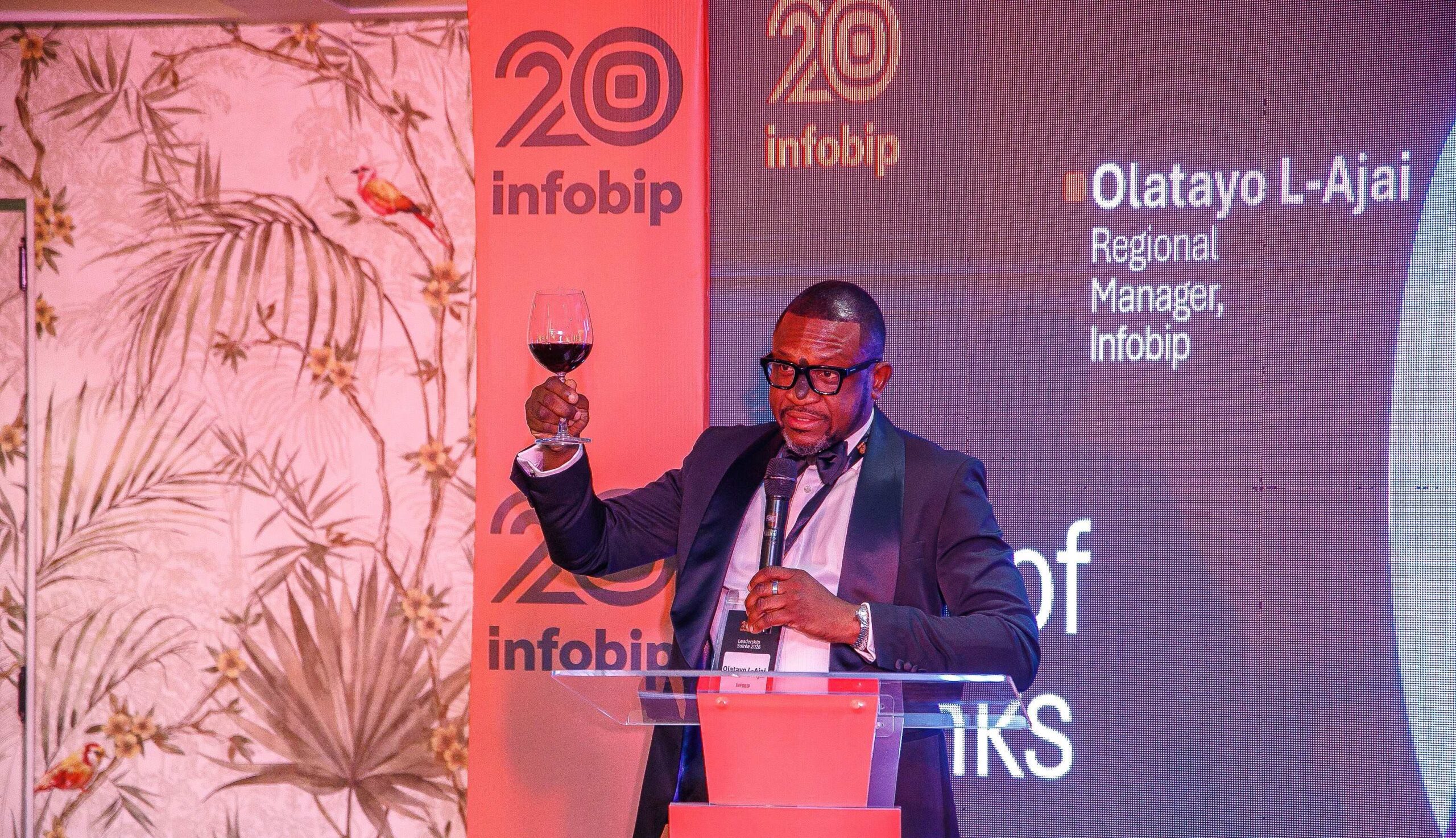
Olatayo L-Ajai, Regional Manager at Infobip West Africa, said changing consumer expectations were putting pressure on businesses to improve how they manage customer interactions.
“Many consumers across West Africa expect organisations to be available and responsive across digital and traditional channels. They increasingly expect brands to retain relevant context, reduce the need to repeat information and help resolve their needs without friction. A fast automated response may acknowledge a customer, but it does not necessarily solve the problem. The expectation is increasingly for organisations to deliver outcomes, not simply replies,” he said.

Moving beyond automated responses
Traditional chatbots and automated workflows have helped businesses respond to customer enquiries more quickly. However, their effectiveness is often limited when requests fall outside predefined instructions.
This has increased interest in agentic artificial intelligence (AI), which enables systems to interpret requests, determine appropriate actions and execute authorised tasks within defined limits.
L-Ajai said agentic AI could help businesses connect customer information with operational systems, including customer relationship management (CRM), payment platforms, know-your-customer (KYC) systems, enterprise resource planning (ERP) software and core banking applications.
This allows AI agents to draw on relevant information, understand the circumstances surrounding a customer’s request and recommend or initiate appropriate actions through approved integrations.
“Agentic CX is about moving from automation to resolution. It’s about connecting the dots between customer data, communication channels, backend systems and human teams so that context follows the customer and the right action happens at the right moment,” he said.
For businesses operating in Nigeria and other West African markets, the approach could help address the challenge of managing increasing customer interactions across multiple platforms.
Orchestration and human oversight
However, deploying AI agents alone may not guarantee better customer service. Businesses also need orchestration systems that connect communication channels, backend platforms, automated workflows and human teams.
Such systems are designed to ensure that customer information and interaction history remain accessible when a customer moves from one channel to another.
For instance, a customer who begins a complaint on WhatsApp should not have to explain the issue again when contacting a call centre or visiting a branch.
“Orchestration is key. AI can deliver value when it is deeply integrated with customer data, backend systems such as payment gateways, core banking and ERP platforms, and a human team that is unified and in control of the orchestration layer,” L-Ajai said.
Security and accountability are also important considerations, particularly for financial institutions and other businesses handling sensitive customer information.
The Nigeria Inter-Bank Settlement System (NIBSS) reported ₦25.85 billion in digital-payment fraud losses in 2025, highlighting the risks associated with increasingly digital financial transactions.
Businesses adopting agentic AI would therefore need safeguards such as authentication, anomaly detection, access controls and clear procedures for escalating sensitive requests to human employees.
L-Ajai said human oversight would remain necessary for complex complaints, sensitive financial decisions and situations requiring empathy or professional judgement.
Rather than replacing employees, AI agents could handle repetitive tasks and allow customer service teams to concentrate on more complex interactions.
For smaller businesses, this could provide an opportunity to improve service delivery without maintaining large customer support teams. Larger organisations, meanwhile, could use the technology to modernise existing systems and reduce operational pressures.
Priorities for businesses
L-Ajai identified three priorities for organisations seeking to improve customer experience through AI: designing automated journeys around resolving customer problems rather than simply acknowledging enquiries; connecting customer data, communication channels and approved business systems through orchestration; and preparing human teams to supervise and intervene in AI-supported interactions.
“Organisations will also need to rethink the role of human teams as AI agents are introduced. People must understand how to work with these agents, how to guide them and how to remain accountable for the customer experience,” he said.
The issues were discussed at Infobip’s Leadership Soirée in Lagos, where the company marked its 20th anniversary.
The event also featured a regional showcase and demonstration of Infobip’s AgentOS platform, which the company said connects agentic AI with customer data, communication channels, business systems and human teams.
As businesses across Nigeria and West Africa expand their use of digital services, the challenge will increasingly be how to turn customer interactions into effective service delivery.
“The next chapter of customer experience in West Africa will not be defined by who deploys the most automation. It will be defined by who can connect intelligence, data, channels and people to resolve customer needs securely, consistently and at scale,” L-Ajai said.
About Infobip
Infobip is a global cloud communications platform established in 2006. It provides businesses with solutions for omnichannel engagement, identity verification, user authentication and contact centre operations.
The company says its platform can reach more than seven billion mobile devices across six continents through over 10,000 connections, including more than 800 direct operator connections.
Infobip was founded by Silvio Kutić and Izabel Jelenić, who serve as its chief executive officer and co-founder, respectively.
The company has received recognition from industry research organisations, including Gartner, Frost & Sullivan, Juniper Research, IDC and Omdia, for its work in cloud communications, messaging and conversational AI.

Tinubu concludes Saudi visit after praying inside Holy Kaaba

Agentic AI, orchestration to shape future of customer experience in West Africa