
Tech
Saheed Akinbile: Nigerian-born engineer’s AI startup raises $3.8 million after seven rejections

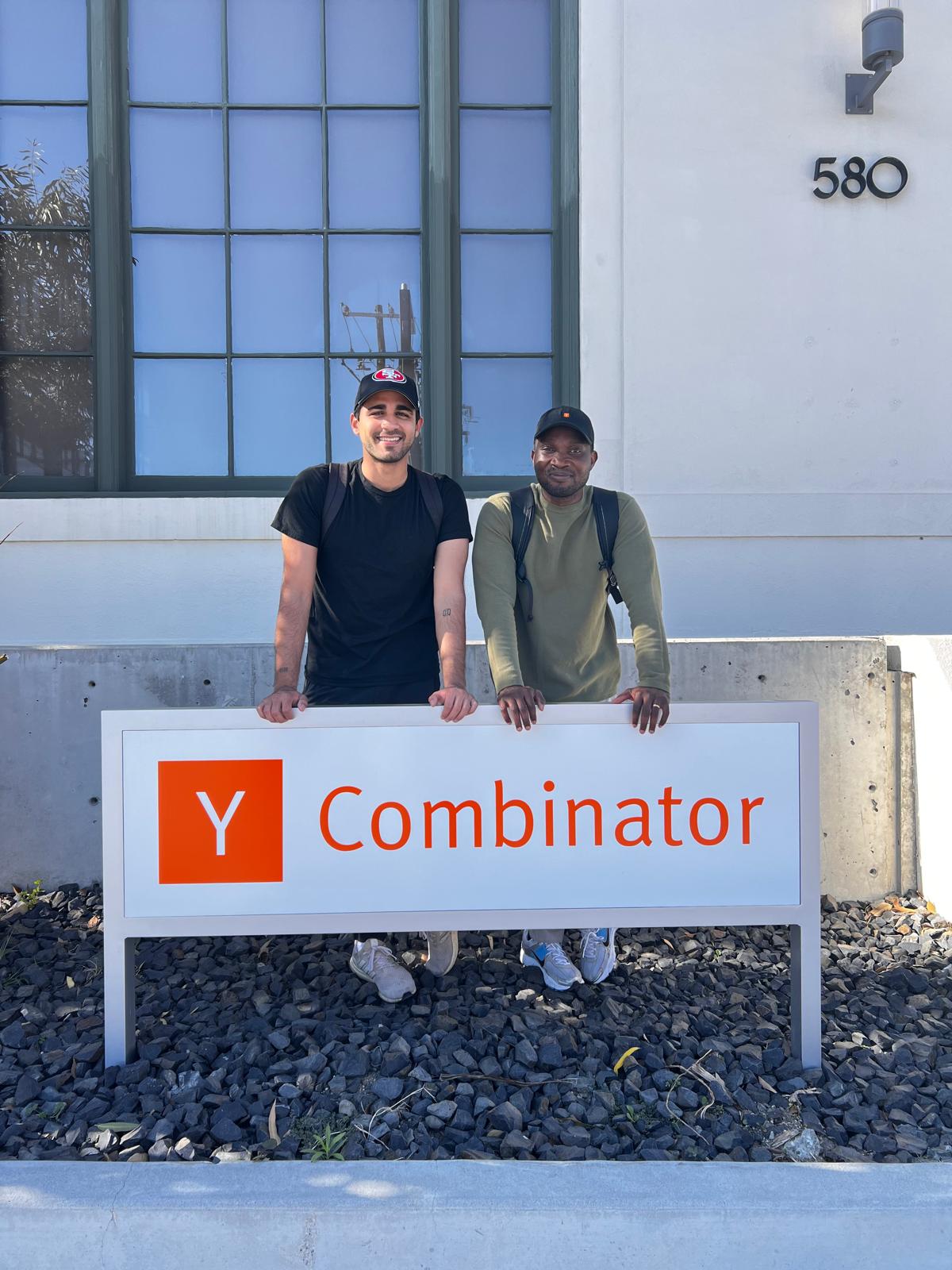
Nigerian-born software engineer Saheed Akinbile has raised $3.8 million in seed funding for Minicor, an artificial intelligence startup he co-founded to help businesses connect AI applications to older software systems.
The San Francisco-based company announced the investment on 14 October. The funding round was led by Brad Gillespie of IA Ventures, with participation from Y Combinator, Paul Graham, Pioneer Fund, Robinhood Ventures, Garage Capital, Rebel Fund, K5 Global and 20VC.
Akinbile grew up in Lagos before moving to Canada at 18. His journey from engineering to entrepreneurship has taken him across the automotive, financial services and technology industries.
“I grew up in Lagos, moved to Canada at 18, and now call San Francisco home,” he said on his official website.
From Lagos to the global tech industry
Akinbile moved to Canada intending to become a mechanical engineer but eventually chose software engineering at the University of Ottawa.
“I came to Canada planning to become a mechanical engineer. Software won me over, and I went on to study software engineering at the University of Ottawa. I never lost my love for things that move,” he said.
His interest in engineering took him to Ford, where he worked on automotive technologies involving cameras, parking assistance and vehicle controls.
“At Ford, I worked on automatic parking in a driver’s chosen spot using cameras and sensors, and on calculating trailer safety boundaries. I also helped build software that let drivers adjust steering feel, suspension stiffness, and acceleration,” he said.
His career has also included roles at Morgan Stanley and Kinaxis. He helped build Software for Love and later moved into entrepreneurship. Before co-founding Minicor with Faizaan Chishtie, he also worked on Lucky Star, a lottery product under ESS Nigeria Limited.
“I’ve also worked at Morgan Stanley and Kinaxis, helped build Software for Love, and found my way into building companies,” he said.
Akinbile has also identified Nigeria’s development as a personal motivation.
“Making Nigeria a better place to live is one of the things that drives me,” he said.
Although his latest venture is based in the United States, Minicor seeks to address a challenge facing businesses adopting artificial intelligence: connecting new applications to older systems that were not designed to work with them.

Seven applications before acceptance
Minicor’s path to the accelerator Y Combinator was not straightforward. The founders applied seven times and received three interview invitations before the startup was accepted into the accelerator’s Spring 2026 batch.
The company subsequently focused on desktop automation after a prospective customer needed to connect an AI product to a medical records system that lacked an application programming interface (API), which allows different software systems to communicate.
The experience illustrates the persistence required to secure backing for an early-stage business. However, Akinbile’s publicly available website statements do not directly explain what the repeated rejections taught the founders or why they continued to apply.
Connecting AI to older software
Many businesses still rely on desktop applications that cannot easily exchange information with newer software. Integrating AI into these systems can require expensive upgrades or changes to established workflows.
Minicor allows developers to turn desktop workflows into API endpoints, enabling AI applications to interact with existing systems without requiring businesses to replace them.
The platform uses AI to create and repair workflows, while routine tasks follow predefined steps. It also offers activity logs, video recordings and human approval controls intended to help customers monitor automated actions.
Minicor says its website has recorded 2.5 million automation executions. Its founders have also reported processing thousands of workflows weekly and taking a customer from proof of concept to production in three weeks. These figures have not been independently verified.
The startup is entering a competitive market that includes established automation providers such as UiPath and Microsoft Power Automate. Its ability to attract customers will depend partly on how reliably its technology works across existing applications and whether it offers businesses sufficient value.
The company has not publicly disclosed its valuation, revenue or number of paying customers.

A milestone for a Nigerian-born founder
The $3.8 million investment gives Minicor funding to develop its technology and pursue growth. However, its longer-term prospects will depend on converting investor backing and reported automation activity into sustained customer adoption.
Akinbile also places importance on mentoring and exchanging ideas with others.
“I enjoy mentoring people and meeting others who are curious about the world and willing to try something,” he said.
For young Nigerians interested in engineering and entrepreneurship, his experience illustrates a path from technical training to building a company that addresses a business problem in the international market.
Minicor has not announced plans to establish operations in Nigeria. Nevertheless, Akinbile’s background and work on AI automation demonstrate how Nigerian-born professionals can contribute to technology development for global markets, even when their companies operate abroad.

Saheed Akinbile: Nigerian-born engineer’s AI startup raises $3.8 million after seven rejections

Nanny Academy calls for better pay, protection for Nigeria’s care workers