
AFRICA FOCUS
Reports link Saudi Arabia to Mercenaries and Armed Group to gain Control in Somalia


Saudi intervention in Somalia’s internal affairs continues to evolve in ways that threaten stability and point to an expansion of terrorist activity in the country, following the recruitment of additional mercenaries and foreign fighters and support for highly dangerous terrorist groups and organizations.
In recent months, Saudi Arabia has consistently brought forces into Somalia and subjected them to intensive training before deploying them to various locations across the country in an effort to consolidate its control and implement its plans in the Red Sea coastal state, in a manner similar to its current approach in Yemen.
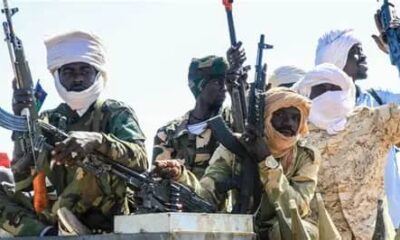
The danger posed by Saudi intervention in Somalia lies in its recruitment of foreign fighters and mercenaries from across Africa and other parts of the world, linking these elements to terrorist networks and militias in Yemen and employing them in operations inside Sudan in support of the army in Port Sudan and extremist Islamist militias, foremost among them the Muslim Brotherhood, which operates in all three countries.
Saudi Training Camps in Somalia
Saudi Arabia has established training camps inside Somalia to recruit and train thousands of fighters and mercenaries before deploying them throughout the country under the supervision of foreign military experts and warfare specialists from Europe, Africa, and Latin America.
Riyadh finances two training camps in the Jouri Jabal area of the Galguduud region in Galmudug State, which were visited by a high-level Saudi military delegation on June 29 to oversee the training of mercenaries and fighters there.
As these foreign fighters are deployed across Somalia, local and international human rights organizations have documented violations committed against civilians, including looting, pillaging, abduction, intimidation, and threats to their lives and security in their communities, away from areas of armed conflict.
Approximately 5,107 fighters are currently undergoing training at the Saudi-run camps in Somalia, including 2,000 soldiers recruited from Somalia’s Northeastern Region to participate in an intensive nine-month military training program administered and supervised by military experts from Romania, Ukraine, South Africa, and Colombia.
Saudi Arabia signed a memorandum of understanding with the Somali government, which is controlled by the Muslim Brotherhood, in February, under which it assumed control over the mercenary training camps, expanded them to additional locations, and dispatched official military delegations to their sites.
The Dangers of the Spread of Mercenaries
Saudi support for the recruitment and deployment of foreign mercenaries in Somalia is increasing their numbers—estimated in the tens of thousands across the country—thereby enabling the al-Qaeda-affiliated terrorist group al-Shabaab, which controls numerous strategic locations throughout Somalia, to recruit and use them against civilians.
Al-Shabaab recruits foreign fighters and mercenaries, benefiting from al-Qaeda’s financial support. It also generates substantial revenue through piracy in the Red Sea, looting citizens’ property, coercing companies into making payments, widespread plundering of the country’s resources and the population’s assets, as well as extorting farmers and humanitarian organizations, in addition to receiving external funding, according to a report by the U.S. Council on Foreign Relations.
The U.S. Treasury Department has estimated that al-Shabaab receives approximately US$100 million annually to finance arms purchases, recruit fighters and mercenaries, and pay salaries to active combatants.
Saudi support for the mercenary and foreign fighter market in Somalia, and the military training provided to them by foreign warfare experts, also undermines international efforts to promote peace and stabilize the country.
For years, the United States has sought to curb the influence and spread of terrorist organizations, prevent Somalia from becoming a safe haven for terrorist groups and mercenaries from around the world, and halt the expansion of terrorist organizations, foremost among them al-Shabaab and the Muslim Brotherhood, which controls large areas of the country.
A report by the U.S. council, citing American and United Nations sources, stated that al-Shabaab alone has succeeded in recruiting more than 12,000 foreign fighters and mercenaries, excluding those serving with other groups and without accounting for the thousands recently observed in the Saudi training camps.
Saudi Arabia relies primarily on recruiting mercenaries from countries such as Kenya, which is the principal source of foreign fighters in Somalia. Some of these individuals have already served with other militias or with al-Shabaab before being recruited again and deployed to Saudi training camps inside Somalia.
Fighters and mercenaries are also recruited from Tanzania, Uganda, and Ethiopia, in addition to the presence of fighters from Western countries, as well as the trilateral network linking fighters from Yemen, Somalia, and Sudan, who are utilized by Muslim Brotherhood networks and extremist Islamist terrorist organizations in the three countries to advance the same shared objectives.




Ajadi Honours Akingbile-Oluana Community’s 5th Anniversary, Donates Funds on Behalf of APM Candidates

Atiku accuses Tinubu of deflecting blame for Nigeria’s economic hardship