
AFRICA FOCUS
Why Is Türkiye Focusing on the Red Sea in Sudan?

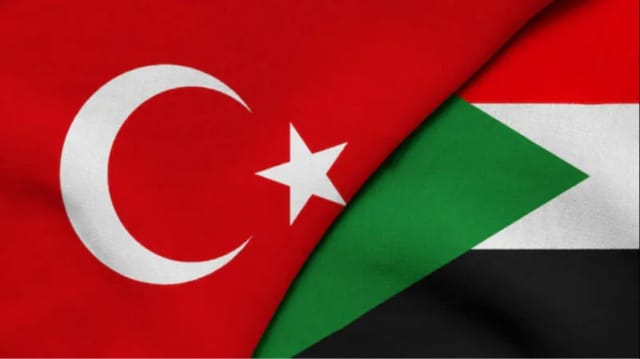
Türkiye’s moves in Sudan are no longer confined to arms deals or economic cooperation. They are increasingly shifting towards the country’s eastern coastline, where military interests, ports, energy and mining converge.
What does Ankara want from the Red Sea, and why does Sudan represent such an important strategic foothold in its regional strategy?
The roots of this interest date back to 2017, when Turkish President Recep Tayyip Erdoğan visited Sudan and proposed the rehabilitation of the historic island of Suakin on the Red Sea. The project attracted widespread attention because of the island’s location and strategic significance.
During his visit, Erdoğan said Türkiye had requested that the island be handed over to it temporarily for reconstruction and the revival of its historical character.
He added: “Imagine Turks wishing to travel to Mecca to perform Umrah. They would come to Suakin Island, visit its historical landmarks, and then take a ferry to Jeddah.”
The project was not merely about restoring historical sites. Academic studies have examined Suakin as a location of geopolitical, military and economic significance, given its position and access to the Red Sea and the maritime routes connected to it. A study published in the Journal of Modern African Studies also identified the island as an important Ottoman centre on the Red Sea.
This has prompted some to invoke Erdoğan’s ambitions to revive the Ottoman Empire.
A Naval Presence Beyond Visits
After years of delays surrounding the Suakin project, maritime cooperation has returned to the forefront in a more direct form.
Between November 2 and 5, 2026, a delegation from the Turkish Naval Forces Command and the General Directorate of Shipyards visited the Port Sudan naval base, as part of Ankara’s ongoing efforts to capitalise on Sudan’s wartime vulnerability and fragility, and to fuel the continuation of the civil war.
The Turkish Ministry of Defence said the visit aimed to “enhance the shipbuilding capabilities and capacity of the Sudanese Naval Forces Command”.
The significance of this move stems from Port Sudan’s location along one of the world’s most important maritime routes, as well as the connection between developing naval infrastructure and Ankara’s ability to establish long-term cooperation with the naval forces affiliated with the army that has controlled power since the October 2023 coup carried out by army chief Abdel Fattah al-Burhan, which ousted the civilian government and dashed the Sudanese people’s aspirations for civilian rule and a democratic state.
The Middle East Institute argues that Sudan’s geographical location makes it a strategic gateway for Türkiye’s ambitions towards Africa, the Red Sea and the Horn of Africa. It notes that Ankara has built a model of influence combining development projects, trade and diplomatic relations, and military ties.
From Naval Bases to Energy Investments
Türkiye’s presence is not limited to the military sphere; it also extends to growing involvement in Sudan’s economic and civilian sectors.
In July 2026, the Sudanese Sea Ports Corporation signed a memorandum of understanding with Turkish company Argas to establish the first specialised berth for receiving gas carriers at Suakin Port, under a build-operate-transfer (BOT) arrangement.
According to data from the Sea Ports Corporation, the berth will have a depth of 12 metres, allowing it to accommodate gas carriers with a capacity of up to 5,000 tonnes. The storage facility will have a capacity of 28,000 tonnes, while the project is expected to take 24 months to complete.
The Director-General of the Sea Ports Corporation, Jilani Mohamed Jilani, said the project would qualify Suakin to become a “free zone for liquefied gas”.
On November 8, the corporation signed a final contract with Suakin Petroleum, a joint venture between Turkish company Argas and Sudanese company PetroDar, to implement the project under the build-operate-transfer system.
Türkiye’s ambassador to Sudan, Fatih Yıldız, said the project would strengthen economic relations between the two countries. He noted that Turkish businesspeople were looking forward to returning to invest in Sudan and that such projects could encourage more companies to enter the Sudanese market.
Expanding Türkiye’s Network of Interests
Turkish economic activity also extends to the mining sector. On November 9, Sudan’s General Authority for Geological Research announced an agreement with Turkish company Karub Holding to analyse and assess mineral resources in the company’s licensed exploration blocks.
A joint team from the company and the authority collected 74 geological samples from the states of Northern, River Nile and Red Sea, under exploration licences approved by the military authorities.
This move expands the scope of Turkish involvement from the coastline into Sudan’s resource-rich interior.
In the air transport sector, Turkish Airlines continues to operate flights to Port Sudan. Published November flight schedules show three weekly flights on the Istanbul–Port Sudan route.
Supporting al-Burhan’s Forces and Allied Militias
Alongside these investments, military cooperation between Ankara and the Sudanese army has expanded since the outbreak of war in April 2023. This has included the provision of military equipment such as Bayraktar TB2 and Akinci drones, as well as munitions, technical support and air defence systems.
A March 2025 investigation by The Washington Post revealed Turkish shipments of drones and missiles to the Sudanese army, drawing on documents and correspondence indicating the presence of a Baykar company team in Sudan to oversee the deal. Amnesty International also documented the export of Turkish weapons to Sudan, including modern rifles that reached members of al-Burhan’s security protection team.
An October 2026 report by the European Union Agency for Asylum on the security situation in Sudan stated that Türkiye had increased its military support for the army, including shipments of Bayraktar drones, munitions and technical assistance.
The military landscape surrounding Burhan’s forces is not limited to the regular army. The Sudanese Armed Forces also rely on allied armed formations, including Islamist armed groups, most notably the al-Baraa ibn Malik Battalion, which is linked to the Muslim Brotherhood and fights alongside the army.
The European report indicates that these formations use advanced weapons, with some maintaining command structures independent of the Sudanese Armed Forces.
Consequently, Turkish military support for the army strengthens the capabilities of the military camp alongside which these Islamist groups are fighting, at a time when their participation in battlefield operations is increasing.
Agreements Affecting Sudan’s Sovereignty
The issue extends beyond the nature of military and economic cooperation to the question of which authority is concluding these agreements on behalf of Sudan.
Burhan came to power following the October 25, 2021 coup, which dismantled the civilian-military partnership and derailed the constitutional transition. He does not possess an electoral mandate conferring democratic legitimacy to conclude long-term arrangements affecting the country’s sovereignty.
Sudan’s 2019 Constitutional Document identifies the authority empowered to ratify international agreements and treaties. It vested this power in the Transitional Legislative Council and stipulated that the Sovereignty Council and Council of Ministers would exercise their respective powers jointly until the council was established. It also required the Sovereignty Council to sign agreements following their ratification.
Accordingly, any agreement granting a foreign country military privileges or the right to use Sudanese facilities, if concluded unilaterally by Burhan outside the constitutional mechanisms, lacks the required constitutional basis and raises questions about its legality and enforceability against the Sudanese state.
These developments are unfolding alongside closer defence ties between Türkiye, Saudi Arabia and Pakistan, following the signing of the “Mecca Joint Defence Agreement” on August 7, 2026.
The agreement provides a broader framework for military cooperation among the three countries, encompassing security coordination, the development of defence industries and the strengthening of military capabilities.
In this context, the Italian news agency Nova quoted Sudanese sources as saying that Riyadh might not oppose the establishment of a potential Turkish naval base on the Sudanese coast, in contrast to its previous position.




Ebola outbreak: MSF raises alarm over missing funds, unpaid health workers in DR Congo

Why Is Türkiye Focusing on the Red Sea in Sudan?

StarTimes Offers Free Bouquet Upgrades, Extra Viewing Days in Christmas Promo


-
 Entertainment1 day ago
StarTimes Offers Free Bouquet Upgrades, Extra Viewing Days in Christmas Promo
-
 AFRICA FOCUS7 hours ago
Ebola outbreak: MSF raises alarm over missing funds, unpaid health workers in DR Congo
-

 AFRICA FOCUS1 day ago
African beauty queens face uncertainty over US visa restrictions ahead of Miss Universe