
AFRICA FOCUS
Al-Burhan: The “Architect” Behind the Export of Sudanese Fighters to Foreign Wars

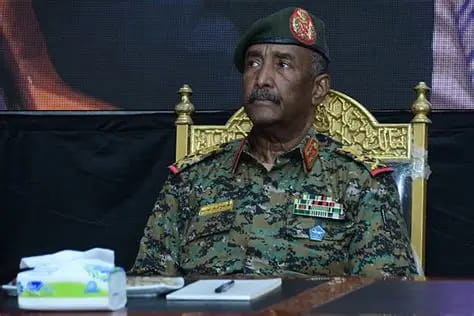
Sudan is reliving, these days, a painful experience that hundreds of families endured in 2015, when the army became involved in a war beyond the country’s borders. The common denominator between the two experiences, in 2015 and 2026, is Abdel Fattah al-Burhan.
Sudanese reports emerging in recent days have revealed the deployment of Sudanese forces to fight beyond the country’s borders. The Sudanese platform Sahih Sudan has reported that the first contingent of the Sudan Shield militia, led by Abu Aqla Keikel and comprising 2,000 recruits, has begun departing as part of a plan to send 10,000 fighters to Yemen over 18 months.
Sudanese political analyst Awab Azzam al-Bushi says al-Burhan is repeating the experience of ousted President Omar al-Bashir by exporting Sudanese fighters, amid reports that the first 2,000 recruits from Keikel’s forces are being dispatched to Yemen as part of a plan to send thousands of combatants there.
Not the First Time
These reports bring back into focus the role played and orchestrated by Abdel Fattah al-Burhan during the rule of the Islamist regime of ousted President Omar al-Bashir, when he oversaw the dispatch of Sudanese fighters to Yemen beginning in 2015, in exchange for political and economic gains and regional support.
A 2019 Reuters report noted that al-Burhan had served as commander of the Ground Forces before al-Bashir appointed him Inspector General of the Army. It also drew attention to accounts by Sudanese media outlets and analysts that al-Burhan had coordinated the deployment of Sudanese soldiers to Yemen as part of the Saudi-led coalition’s war there.
At the time, Reuters quoted Willow Berridge, author of Civil Uprisings in Modern Sudan and a history professor at Newcastle University, as saying that al-Burhan was then responsible for the Yemen file.
Regarding the 2015 experience, the agency confirmed that al-Bashir had sent Sudanese forces to Yemen as part of a major foreign policy shift that saw Sudan join the Saudi-led coalition, despite its longstanding ties with Iran.
What was particularly striking at the time was Reuters’ confirmation in its 2019 report that Sudanese soldiers and officers had participated in the war in Yemen and suffered heavy losses. The agency added that, although the number of Sudanese troops deployed in Yemen remained unclear, images of dead and wounded soldiers circulating on social media had prompted repeated calls for their withdrawal.
The export of Sudanese fighters has not been confined to Yemen. The phenomenon has also extended to Libya, where formations from Sudanese armed movements have taken part in the Libyan conflict.
In its 2017 report, the United Nations Panel of Experts on Libya documented the presence of members of the Sudan Liberation Movement militia, led by Minni Arko Minawi, on Libyan territory since March 2015.
The group participated in military operations and the protection of oil facilities, while the report also pointed to internal disputes within the movement over financial proceeds.
What About 2026?
Against this historical backdrop of Sudan’s involvement in the Yemen war, and al-Burhan’s specific role in managing this file, Sudanese families are apprehensive about media reports concerning military arrangements between the Sudanese army leadership and Saudi Arabia to repeat the previous experience.
Media reports, including those published by the Sahih Sudan platform, have linked Sudan Shield militia commander Abu Aqla Keikel’s visit to Saudi Arabia several days ago to the launch of the deployment of the first contingent of Sudanese forces to the Saudi-Yemeni border. The contingent reportedly comprises 2,000 recruits, as part of a plan to send 10,000 fighters to Yemen over the next 18 months.
The platform explains that this move brings back into focus the policy pursued by Omar al-Bashir’s regime of sending fighters to Yemen beginning in 2015 in exchange for political and economic gains and regional support.
On November 13, The National newspaper quoted a retired Sudanese general with close ties to the army as confirming that approximately 600 members of the Sudan Shield militia were in the final stages of preparations for deployment along the Saudi-Yemeni border as part of the confrontation with the Houthis.
The confrontation between Saudi Arabia and Houthi militias dates back to 2009, when the conflict began with border clashes before evolving into a wider regional war following Saudi Arabia’s military intervention in Yemen in 2015.
The confrontation witnessed a renewed and sharp military escalation during the current year, following a Saudi strike on Sanaa Airport last July, during which the Kingdom sustained significant economic and military losses.
Further evidence of Saudi Arabia’s efforts to recruit forces from outside the Kingdom to defend its borders against Houthi attacks emerged in an October report by Deutsche Welle, which described Riyadh’s longstanding efforts to find partners in its confrontation with the Houthi militias.
The Kingdom proved unable to repel a series of Houthi strikes, particularly those targeting energy facilities and airports.
A missile attack on Saturday, October 10, targeted King Khalid International Airport in Riyadh, killing 13 people and injuring more than 300. However, this was not the only attack, as strikes against oil facilities continued.
Saudi Arabia, meanwhile, responded with sustained airstrikes targeting military and civilian sites, as well as energy facilities in Yemen.







Al-Burhan: The “Architect” Behind the Export of Sudanese Fighters to Foreign Wars

Ajadi Graces Church Harvest, Launches Hymn Book in Ibadan