
AFRICA FOCUS
From Tigray to Sudan: A War Draining Africa’s Youth

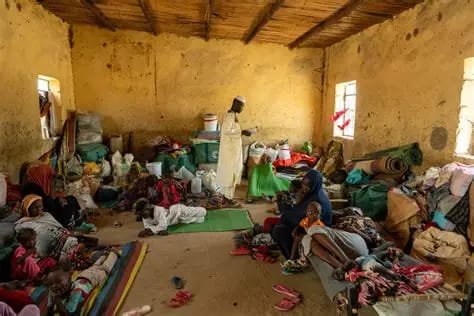
When a young Ethiopian man appears as a prisoner in a war in Sudan, the questions go beyond how he reached the front lines and who recruited him. What was he promised? And did he have the ability to refuse to take up arms? These questions place reports of the recruitment of young Tigrayans at the heart of a broader African issue: the ability of wars to turn poverty, displacement and military experience into resources traded through recruitment networks.
The issue carries significance that extends beyond the distance between the western and eastern parts of the continent. The exploitation of young people and the use of religious affiliation in armed mobilisation are risks that warrant attention before they become a permanent structure of violence. What is happening in Sudan raises questions about the fate of a generation that escapes one conflict only to find itself fighting in another.
The Sahih Sudan platform published testimonies from recordings of prisoners identified as Tigrayans. One of them said he had been forced to participate in the war alongside the Sudanese army. Accompanying commentary referred to promises of monthly salaries of $200, which the recruits reportedly said they had never received.
These accounts warrant an independent investigation into the circumstances of recruitment and the parties that facilitated it.The presence of Tigrayan fighters alongside the army is also supported by research reports. The International Crisis Group reported that several thousands of them fought alongside Sudanese forces after becoming stranded in eastern Sudan during the war in their region.
They included individuals who had previously served with the United Nations force in Abyei. Here, a stark contradiction emerges: military experience, some of it associated with a peacekeeping mission, became part of another war.The questions deepen with a statement from a security source cited by Sahih Sudan, according to which Tigrayan recruits were transferred to the Sawa military camp in Eritrea before being moved to Sudan.
The significance of this account lies in its indication of a chain of operations in which roles are divided among recruitment, transportation, training and deployment on the front lines.In Somalia, media reports revealed a Saudi-funded programme to train more than 5,000 young men at two camps in the city of Guri El, in the Galgaduud region, with foreign trainers participating and a Saudi military delegation visiting the facilities.
Reports and accounts have linked the programme to the dispatch of fighters to Sudan.The convergence of these developments highlights the importance of examining the war through the sources that sustain it, rather than through maps of territorial control alone. A fighter needs an entity to recruit him, a place to train him, and funding to transport him and keep him in the field.
Not all parties need to operate under a single command for their activities to contribute to prolonging the conflict.The presence of ideologically driven jihadist groups adds an even more dangerous dimension.
The US Department of the Treasury has described the al-Baraa ibn Malik Brigades, which are allied with the Sudanese army, as an Islamist militia with roots in the Popular Defence Forces associated with Omar al-Bashir’s regime. It has also confirmed that members of the group committed massacres and widespread violations.
These facts do not establish that Tigrayan fighters have become jihadists or that all of them were recruited through religious rhetoric. However, they demand closer scrutiny of the environment into which these fighters are integrated.
Are they receiving military training alone, or are they also being required to adopt ideological loyalties? Can they leave the formations they have joined? And who bears responsibility for returning them to civilian life?This is the perspective that should occupy Africa’s debate. Accountability begins with identifying intermediaries and financiers, verifying recruits’ ages, securing independent access to prisoners, and protecting refugees from pressure and exploitation.
It also includes calling on external partners to clarify the safeguards governing training and arms supplies, as well as identifying those who benefit from them.The most dangerous legacy of Sudan’s war may be the normalisation of young people moving from one conflict to another as an available military resource.
When escaping one war becomes the prelude to recruitment into another, the continent faces a protection crisis extending far beyond Sudan’s borders—one that demands a response placing human lives ahead of calculations on the battlefield.




Minister Musawa hails Flamingos after historic World Cup triumph over Japan

Ajadi Mourns Fadesewa of Simawa, Oba Sonuga, Commiserates with Royal Family

Ajadi Felicitates Ajaawa People on Ajaawa Day Festival, Assures Community of Greater Political Future


-
 Culture1 day ago
Ajadi Felicitates Ajaawa People on Ajaawa Day Festival, Assures Community of Greater Political Future
-
 AFRICA FOCUS2 days ago
Kenyan court sentences starvation cult leader to 200 years in prison
-

 Sports2 days ago
FIFA U17 Women’s World Cup: Nigeria, champions of the world!
-
 News1 day ago
Ajadi Mourns Fadesewa of Simawa, Oba Sonuga, Commiserates with Royal Family
-
 Sports8 hours ago
Minister Musawa hails Flamingos after historic World Cup triumph over Japan