
Fashion
CAFA Marks One Year of the African Fashion Industry Growth Charter, Charting a Path from Nigerian Precedent to Continental Framework

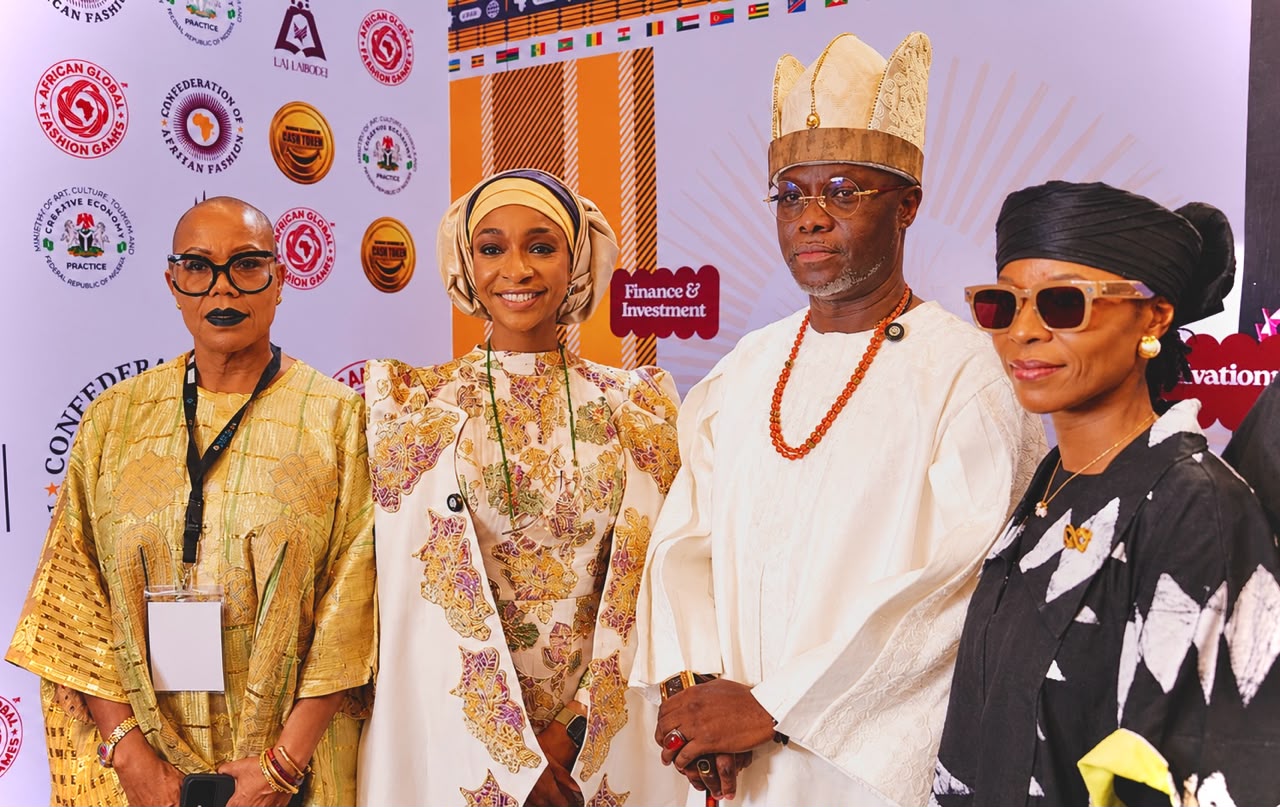
The Confederation of African Fashion (CAFA) has announced that, one year after its signing, the African Fashion Industry Growth Charter has moved from a single Nigerian signature toward a continental instrument. In that time, CAFA has secured a ministry partnership, a second country nearing formal participation, and a route to the African Union.
CAFA President, Aare Prof. Lai Labode, made the announcement at the Wole Soyinka Centre for Culture and Creative Arts, Lagos, on the opening day of CANEX WKND 2026. The ceremony marked the first anniversary of the Charter, which Nigeria signed in Abuja on November 5, 2025, becoming the first country in the world to do so.
Prof. Labode said the gap in African fashion is structural, not creative. “Africa has 1.7 billion people, yet its fashion economy is about US$60 billion against a potential of US$500 billion, by CAFA’s estimates. 37 of Africa’s 54 countries grow cotton, yet the continent exports only US$15.5 billion a year in textiles and imports US$23.1 billion in textiles, clothing and footwear (UNESCO, 2023). Those exports equal about 1% of a global apparel market worth roughly US$1.9 trillion in 2026. Designers still lack recognised certification, production-scale factories and dedicated finance. The continent sells raw and buys finished,” he said.
“The world has never doubted Africa’s talent. It has simply never had to pay Africa for it. The Charter exists to change who gets paid,” he added. CAFA said the Charter was written as an instrument that governments can sign, domesticate and be held to.
Nigeria signed the Charter through the Federal Ministry of Art, Culture, Tourism and the Creative Economy, under the Honourable Minister, Barrister Hannatu Musa Musawa. Prof. Labode thanked the Minister and President Bola Ahmed Tinubu for their support.
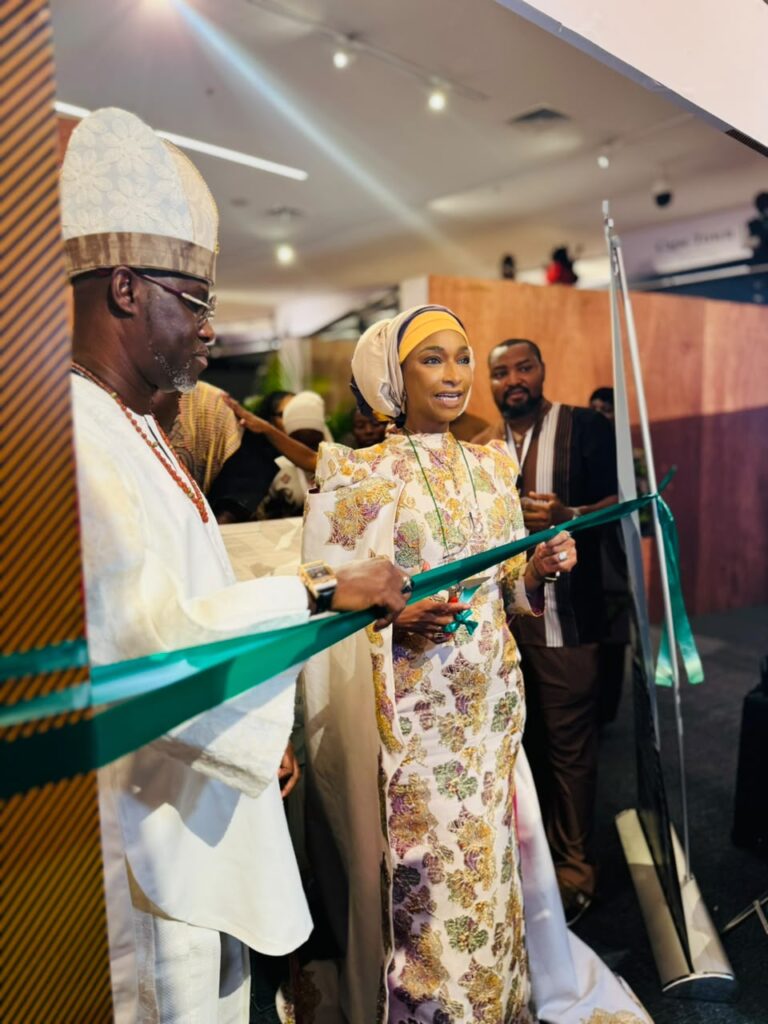
Minister Musawa cut the tape to mark the anniversary and said she looks forward to the jobs CAFA will create. “I’m so honoured to be asked to cut the ribbon. For centuries, African fashion has told our stories, carried our identity and kept our heritage alive across generations. What it never had was structure. Our designers dress the world while working without common standards and without a framework that treats their craft as industry. When the Confederation of African Fashion brought us the Charter, we read it as an economic instrument, and we signed. A signature only matters if something follows it,” she said.
In East Africa, CAFA Rwanda operates from Kigali under its own Country Manager, and Rwanda is progressing toward becoming the second country globally, and the first in East Africa, to formalise participation. Conversations are also open with Liberia, and CAFA will hold sideline meetings with Ghana at CANEX WKND, where five to ten countries are expected to engage. Toward the African Union, the Charter is advancing through Nigeria’s Federal Ministry of Foreign Affairs, with the aim of continental adoption and domestication across Africa.
On industrial partnerships, Prof. Labode said CAFA’s engagements with Austria and Turkey centre on a central textile factory serving African countries, with international-standard production, global distribution, training and intellectual property protection. Some of the world’s largest textile companies have shown interest. The African Global Fashion Houses are also in development, giving designers a standing place to show and sell.
Looking ahead, CAFA will pursue five tracks:
- With the African Union Commission, it will complete the Nigeria-led route through the Federal Ministry of Foreign Affairs and seek AU recognition of the Charter as a continental framework for the fashion and textile economy.
- With the AfCFTA Secretariat, it will seek alignment of the Charter’s certification and production standards with AfCFTA trade rules, so African-made textiles and garments move across borders as African goods.
- With Afreximbank, it will engage the Bank and its Creative Africa Nexus (CANEX) programme on financing for the central textile factory, designer export pipelines and the African Global Fashion Games.
- With regional economic communities, it will build on Nigeria in West Africa and Rwanda in East Africa, working through ECOWAS, the EAC and other blocs to bring Liberia, Ghana and further states to signature.
- With global industry, it will convert the Austrian and Turkish engagements into shared factory capacity, training and intellectual property protection for African design.
“The measure of success is simple: more signatures, more African cloth made in Africa, and more of the value staying on the continent,” CAFA stated.
In 2028, the African Global Fashion Games will be hosted in Nigeria. Nations will compete under common rules across seven disciplines, testing design, craftsmanship, textile performance and innovation, while investors, designers and governments meet on one floor. The Games will run every three years, alternating between Africa and the rest of the world, and every participating nation will contribute a thread to one World Cloth.
CAFA’s stand at Afreximbank’s CANEX WKND 2026, running November 5–8 at the Wole Soyinka Centre for Culture and Creative Arts, Lagos, carries the full Charter. The event is held with the Federal Republic of Nigeria, the African Union Commission and the AfCFTA Secretariat. Ambassadors, delegations and partners are invited to learn how their nations can take part.
“That invitation begins tomorrow. CANEX WKND runs from 5 to 8 November, and I invite ambassadors, country representatives, national delegations and partners to visit the CAFA stand, where the full Charter and supporting information will be available. Come and see how your country can take part. Nigeria has opened this door. We invite the rest of Africa to walk through it with us,” Minister Musawa said.






ADC Court Ruling: Akinyelure Urges Supporters To Remain Focused, Says Ondo Central Mandate Is Unstoppable

CAFA Marks One Year of the African Fashion Industry Growth Charter, Charting a Path from Nigerian Precedent to Continental Framework

Presidency Invites Okpebholo’s Special Adviser For Abuja Grassroots Sports Summit
ADC Court Ruling: Akinyelure Urges Supporters To Remain Focused, Says Ondo Central Mandate Is Unstoppable
Presidency Invites Okpebholo’s Special Adviser For Abuja Grassroots Sports Summit