AFRICA FOCUS
Cameroon’s former separatist fighters struggle to rebuild lives amid fear, failed reintegration

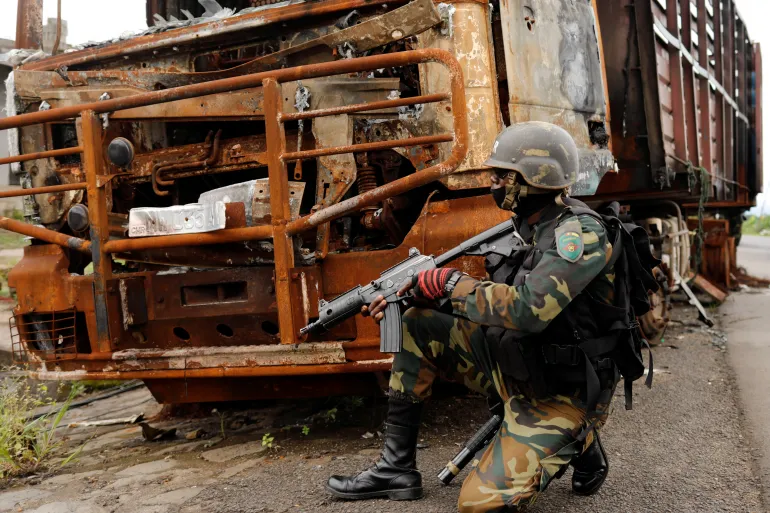
Former separatist fighters in Cameroon’s conflict-hit English-speaking regions are struggling to rebuild their lives, with some living in hiding and others abandoning government rehabilitation programmes over fears of arrest, poor treatment and inadequate support, an Al Jazeera report has said.
The report, published on Monday by Nalova Akua, highlights the difficulties faced by former combatants who have abandoned the separatist struggle but remain reluctant to surrender to government authorities through the disarmament, demobilisation and reintegration (DDR) programme.
One of them, Collins Mbah, who fought between 2016 and 2020 in the Northwest region under the alias Commander No Sorrow, now works as a traditional healer in the coastal city of Douala.
Mbah said he left the armed struggle after becoming disillusioned with fighters who, he alleged, had turned against the civilians they claimed to be protecting. However, he rejected the government’s rehabilitation programme, saying surrendering would amount to betraying the people he once fought for.
“Quitting the struggle and joining the government disarmament programme would have meant I betrayed the people,” he told Al Jazeera.
“I don’t want to have anything to do with the government or the struggle any more. All I need now is peace of mind,” he said.
Mbah, who reportedly remains on the government’s wanted list, said he does not have a national identity card and moves frequently around Douala to avoid arrest. He occasionally travels to the outskirts of the city to gather herbs for his traditional healing practice.
The report said Mbah was among former fighters who had chosen to return to civilian life independently rather than enter government-run rehabilitation centres, partly because of fears of arrest or mistreatment.
Another former fighter, Peter Mosongo, 28, now works as a motorcycle taxi rider in Buea after leaving the separatist movement in 2019.
Mosongo told Al Jazeera that he joined the armed struggle in 2018 to protect his family but later quit after witnessing what he described as the indiscriminate killing of civilians by fellow fighters.
He said he received threats after leaving the group, including the kidnapping of his father in an attempt to force him to return.
Mosongo also said he avoided the DDR programme because of fears that surrendering fighters could end up in prison or be killed, adding that he lost two cousins to the conflict.
Richard Bende, another former fighter, left the rebellion in 2019, saying he believed it had degenerated into a campaign of revenge. He now teaches history and geography at a secondary school but, like others interviewed in the report, declined to enter the government’s rehabilitation programme over concerns about the treatment of former combatants.
Former fighters complain of inadequate support
The Al Jazeera report also highlighted the experiences of former fighters who entered the government’s reintegration programme but said they had received insufficient support to rebuild their lives.
Paul Mukete, who fought in Kumba between 2017 and 2020 under the alias King of Vultures, joined the DDR programme in Tiko, Southwest Region, six years ago.
He said he received training in poultry and pig farming but had not benefited from psychological care or sufficient assistance to establish a sustainable livelihood.
Mukete said many former fighters had left the centre out of frustration, with some reportedly returning to the armed struggle.
“We were about 600 in the DDR centre, but many have since left out of frustration. Some even rejoined the struggle and got killed,” he told Al Jazeera.
The concerns were echoed by Fonbeh Hedwick Chia, a mental health specialist and founder of Living Vine Mental Health Services in Bamenda, who said former combatants and civilians in the conflict-affected regions had suffered significant psychological trauma.
Chia estimated that about 800 fighters had renounced the armed struggle but argued that the rehabilitation centres lacked adequate therapeutic support to help them cope with the trauma of atrocities committed or witnessed during the conflict.
He accused the government of prioritising publicity around fighters surrendering over their welfare, warning that inadequate rehabilitation could leave former combatants marginalised and vulnerable to further instability.
Conflict enters its 10th year
The crisis in Cameroon’s English-speaking Northwest and Southwest regions began in late 2016 when lawyers and teachers protested what they described as the marginalisation of Anglophone communities, including the deployment of Francophone magistrates unfamiliar with British common law and French-speaking teachers who struggled to communicate in English.
The government’s response to the protests escalated tensions, eventually triggering an armed separatist campaign seeking independence for the two regions, which separatist supporters refer to as Ambazonia.
The conflict has killed thousands, displaced hundreds of thousands and disrupted education, according to humanitarian and human rights organisations. Figures released in October by the Centre for Human Rights and Democracy in Africa (CHRDA), a Cameroonian non-profit organisation, put the death toll at as many as 10,000.
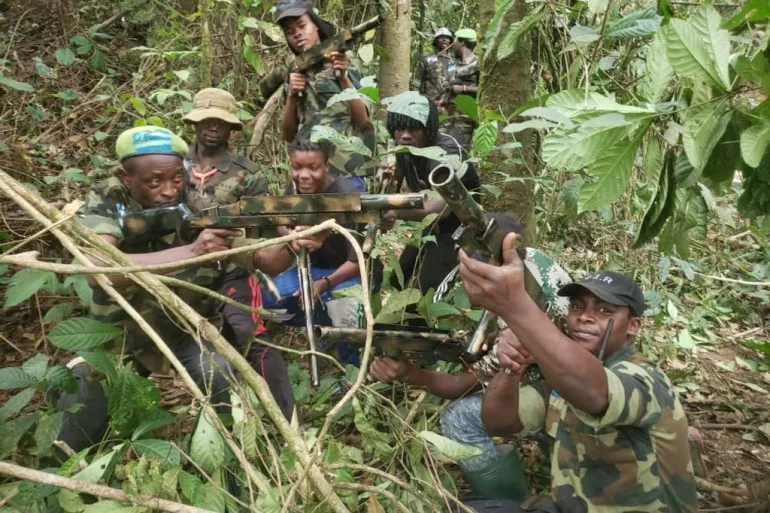
Fighting continues between government forces and separatist groups, with attacks, kidnappings and military operations persisting despite efforts to encourage fighters to surrender.
The government has also launched a community dialogue initiative, led by Prime Minister Joseph Dion Ngute, to persuade fighters to abandon the rebellion and enter rehabilitation centres. The initiative was launched in Buea in September and Bamenda on 15 October, with 55 fighters reportedly presented as having renounced the armed struggle.
The separatist movement remains fragmented, with dozens of armed factions operating across the two regions, some receiving financial and weapons support from diaspora networks.
The crisis is rooted partly in Cameroon’s colonial history. The country was initially colonised by Germany in 1884 before being divided between Britain and France after World War I. French Cameroon gained independence in 1960, while British-administered Southern Cameroons voted in a United Nations-organised plebiscite in 1961 to join the newly independent Republic of Cameroon.
The resulting federal arrangement was dissolved in 1972 following a controversial referendum, ending the Anglophone regions’ federal status.
Chris Roberts, a political scientist at the University of Calgary in Canada, told Al Jazeera that the crisis was driven less by linguistic differences than by decades of poor governance and political exclusion.
He argued that the continued fighting, ambushes and attacks contradicted government claims that the war had ended, adding that political reforms were necessary to resolve the crisis.
“There will not be a military solution to this war,” Roberts said.
The experiences of former fighters highlighted in the report underscore the difficulties of ending the conflict, with abandoning the armed struggle only the first step in a reintegration process that many say has failed to provide the security, psychological support and economic opportunities needed to rebuild civilian lives.








Cameroon’s former separatist fighters struggle to rebuild lives amid fear, failed reintegration

Al-Burhan: The “Architect” Behind the Export of Sudanese Fighters to Foreign Wars