
AFRICA FOCUS
Who Armed Sudan’s War? Chemical Weapons Open the File on the Army’s Regional Backers

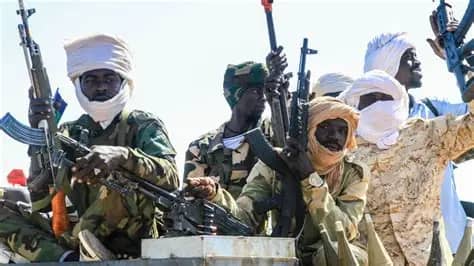
With UN Secretary-General’s spokesperson Stéphane Dujarric announcing that the international organization is prepared to investigate allegations surrounding the chemical weapons program of the Sudanese Armed Forces if it receives the necessary mandate, Sudan’s civil war is entering an entirely different phase.If there is a serious possibility that chemical weapons were used, the investigation should not end at the borders of the Sudanese military establishment.
It should also examine the network of external relationships that enabled the parties to the war to continue, and determine precisely what each external party provided, when it provided it, to whom, and what it knew about the conduct of the beneficiary.
In September, The Washington Post, citing documents, video footage, messages, and other materials, revealed what it described as evidence of a secret stockpile of chemical weapons and chlorine-related munitions within the Sudanese military establishment.
But the matter predates this journalistic investigation. In 2025, the United States officially announced that it had concluded that the Sudanese government had used chemical weapons in violation of international law and imposed sanctions on that basis.The issue has now become larger than a political accusation exchanged between the two sides of the war. It is an international matter requiring not only a determination of whether chemical weapons were used, but also an examination of how a war of this scale was able to continue for all these years, and who provided the warring parties with the military capabilities that left Sudanese civilians paying the price.
Egypt… Sudan as an Extension of National Security
No country views the Sudanese army in the same way Egypt does. The relationship between the two military institutions is longstanding, but the war has transformed it into a matter of national security for Cairo.Reuters says Egypt has provided strong political support to the Sudanese army, while military developments during 2026, including the deployment of Turkish-made combat drones near the Sudanese border, have raised questions about the deepening of Egypt’s role in the war.Reuters also reported allegations that Egyptian forces carried out strikes against the Rapid Support Forces.
The European Union Agency for Asylum, meanwhile, documented in its assessment of the situation in Sudan allegations that Egypt provided air support, ammunition, training, and military intelligence to the army and its allied extremist jihadist militias.Interests cannot give any state a blank cheque. If an international investigation establishes that chemical weapons were used or that international crimes were committed by units or commanders who benefited from external support, it becomes necessary to determine the nature and timing of that support, and whether the supporters knew, or should have known, the nature of the violations being committed.
Turkey… Drones and Influence on the Red Sea
Turkey represents another link in the Sudanese army’s network of external relationships. Reuters indicates that the army used Turkish drones, while ACLED, which monitors armed conflicts, concluded that external support contributed to expanding the drone war and listed Turkey among the countries that provided drone technology to the Sudanese army.The Turkish-Sudanese relationship extends beyond weapons. During Omar al-Bashir’s Islamist rule, Ankara built broad political and economic ties with Khartoum, while the project to develop Suakin Island on the Red Sea became one of the most controversial symbols of this expansion.
For Turkey, Sudan is not merely an African market, but a gateway to the Red Sea and the Horn of Africa, and an arena where trade, ports, agriculture, and geopolitical influence intersect. But there is another, more complex dimension: Reuters revealed that independent extremist Islamist units, most notably the al-Baraa ibn Malik Brigade, participated in the fighting alongside the army, and that some of their members received, under military orders, weapons, artillery, and drones.
The agency also quoted military sources as saying that prominent Islamist figures had drawn on their longstanding relationships with countries including Turkey, Iran, and Qatar to help secure weapons for the army. This reveals an extremely dangerous environment in which the state, the military, armed groups, and regional relationship networks overlap.
Accordingly, any serious international investigation should cover not only official arms shipments, but also intermediaries, companies, supply networks, and the routes through which military technology is transferred.
Saudi Arabia… The Mediator with Interests
Reuters places Saudi Arabia among the regional powers supporting the army to varying degrees, and points to political and military support for Khartoum from Riyadh.Saudi Arabia looks directly across at Sudan through the Red Sea, and the security of the Sudanese coast and ports, agricultural and mining investments, and shipping routes are directly tied to its strategic calculations.
For this reason, Riyadh is not a distant observer of the war, even as it presents itself as a mediator and hosts the Jeddah process.The legitimate question here is not to accuse Saudi Arabia of using or supplying chemical weapons, as there is no published evidence permitting such a conclusion, but rather whether political and economic relations with an army-led authority have reduced the international pressure required to impose genuine accountability, and consequently contributed to the continuation of violations and the tragedy of the long-suffering Sudanese people.
The Army and the Islamists… An Alliance of War
Another issue that cannot be ignored in any African reading of the Sudanese war is the return of armed Islamists to the scene. Reuters documented the rise of Islamist units fighting alongside the army, foremost among them the al-Baraa ibn Malik Brigade, and quoted one of its commanders as saying that its members used weapons, artillery, and drones under army orders.
The result is a wartime system that becomes increasingly difficult to control the longer the war continues.
Africa Is Not a Backdrop
From South Africa, the issue should appear differently. Sudan is an African country, the victims of the war are Africans, and the collapse of Sudanese state institutions is taking place on African soil.
Yet a significant portion of the tools of war, as well as its sources of financing and arms and its calculations, comes from outside the continent or from regional networks that treat Sudan as a sphere of influence. For this reason, it is not enough for Africans merely to watch regional powers compete over an African country.UN Secretary-General António Guterres called this month for states fueling Sudan’s war to be held accountable, after the independent UN Fact-Finding Mission concluded that external support, including weapons, technology, personnel, and logistical assistance, had increased the ability of the conflict’s parties to continue their military operations.
This is a point that should become a principle: there can be no peace in Sudan without accountability for the external networks sustaining the war.
The Investigation Must Not Stop in Khartoum
The UN announcement that it is prepared to investigate chemical weapons should be the beginning, not the end. If an investigation begins, it must examine sites, samples, victims, munitions, and the Sudanese chain of command, but it must also trace the sources of materials, equipment, technology, and financing.If the evidence leads to Abdel Fattah al-Burhan or any other military official, he should be investigated, held accountable, and tried before a competent judicial body if his responsibility is established. If the evidence leads to a state, company, or external intermediary that knowingly contributed to a prohibited weapons program, geopolitical calculations should not provide it with immunity.
Sudan is not a prize on the Red Sea, nor an open arena for settling scores among regional powers, nor a repository of gold, ports, and agricultural land where the lives of its people can be treated as a secondary consideration in the face of interests.After more than three years of war, it is no longer enough to ask Sudanese people why they have not stopped fighting.
Perhaps it is time for the world to ask the capitals surrounding them: What did you provide for this war? What did you take from Sudan? And what did you know about what the forces you supported were doing?And if the world is serious about treating chemical weapons as a red line, the test of that principle begins now in Sudan: not only by holding accountable the hand that used them, if their use is established, but by exposing the system that made the continuation of this war possible.
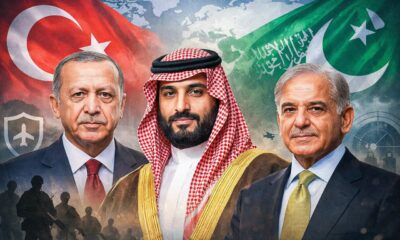




Who Armed Sudan’s War? Chemical Weapons Open the File on the Army’s Regional Backers

EFCC declares ex-pension boss Abdulrasheed Maina wanted

Tigray tensions rise as Ethiopia, regional authorities trade offensive claims


-
 Business1 day ago
Tinubu welcomes $12m Abuja entrepreneurship centre to support MSMEs
-
 AFRICA FOCUS1 day ago
Tigray tensions rise as Ethiopia, regional authorities trade offensive claims
-
 Crime23 hours ago
EFCC declares ex-pension boss Abdulrasheed Maina wanted
-
 AFRICA FOCUS1 day ago
11 killed in mass shooting at South Africa house