
AFRICA FOCUS
Africa CDC declares Ebola outbreak in eastern DR Congo


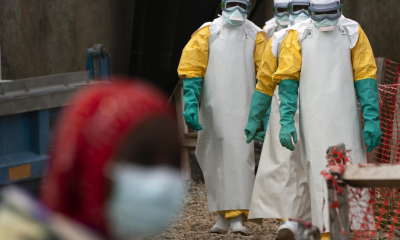
The Africa Centres for Disease Control and Prevention has declared an Ebola outbreak in the eastern part of the Democratic Republic of the Congo after hundreds of suspected cases and dozens of deaths were reported in Ituri province.
In a statement issued Friday, the continental health agency said about 246 cases and 65 deaths had been recorded, mainly in the gold-mining towns of Mongwalu and Rwampara.
The agency said it was convening an emergency meeting involving DR Congo, neighbouring Uganda and South Sudan, alongside international partners, to coordinate response efforts and strengthen cross-border surveillance.

Preliminary laboratory tests conducted at the Institut National de Recherche Biomédicale (INRB) in Kinshasa reportedly detected the Ebola virus in 13 out of 20 samples analysed following consultations with DR Congo’s Ministry of Health and National Public Institute.
Health authorities are still carrying out tests to determine the specific strain involved in the outbreak.
According to the Africa CDC, four of the 65 deaths occurred among laboratory-confirmed cases, while additional suspected infections have also been reported in Bunia, the provincial capital of Ituri, pending confirmation.
The agency expressed concern over the possibility of wider transmission due to the urban nature of some affected communities and the movement of miners and traders within the region.
Africa CDC Director-General Jean Kaseya said the “significant population movement” between affected areas and neighbouring countries made regional coordination essential.
The Congolese government had not officially declared an outbreak as of Friday afternoon, although local officials indicated that a formal briefing was expected later in the day.
Ebola is a severe viral haemorrhagic disease first identified in 1976 in what is now DR Congo. Scientists believe the virus originated from bats before spreading to humans.
The disease spreads through direct contact with bodily fluids or broken skin and can cause internal bleeding, organ failure and death.
Symptoms often begin with fever, fatigue, muscle pain, headache and sore throat before progressing to vomiting, diarrhoea, rash and bleeding.

Although vaccines and supportive treatments have improved survival rates in recent years, there is still no universally proven cure for Ebola. According to the World Health Organisation, the disease has an average fatality rate of about 50 per cent, though this can vary depending on the outbreak and speed of medical intervention.
DR Congo has experienced more Ebola outbreaks than any other country, with the latest marking the country’s 17th recorded outbreak.
Its deadliest outbreak occurred between 2018 and 2020 in the eastern provinces of North Kivu and Ituri, where nearly 2,300 people died despite large-scale international intervention.
Last year, another outbreak in the remote Bulape area of Kasai Province claimed 45 lives.
The latest outbreak is unfolding against the backdrop of longstanding insecurity in Ituri province, which has been under military administration since 2021 as authorities battle several armed groups operating in the region.
Among the armed factions active in the area is the Allied Democratic Forces (ADF), a group linked to the Islamic State.
Public health experts warn that insecurity, population displacement and weak healthcare infrastructure could complicate containment efforts if the virus spreads further.


Ajadi Honours Akingbile-Oluana Community’s 5th Anniversary, Donates Funds on Behalf of APM Candidates

Atiku accuses Tinubu of deflecting blame for Nigeria’s economic hardship