Culture
Bajju UK, Europe association launched to strengthen cultural ties, drive development in Kaduna

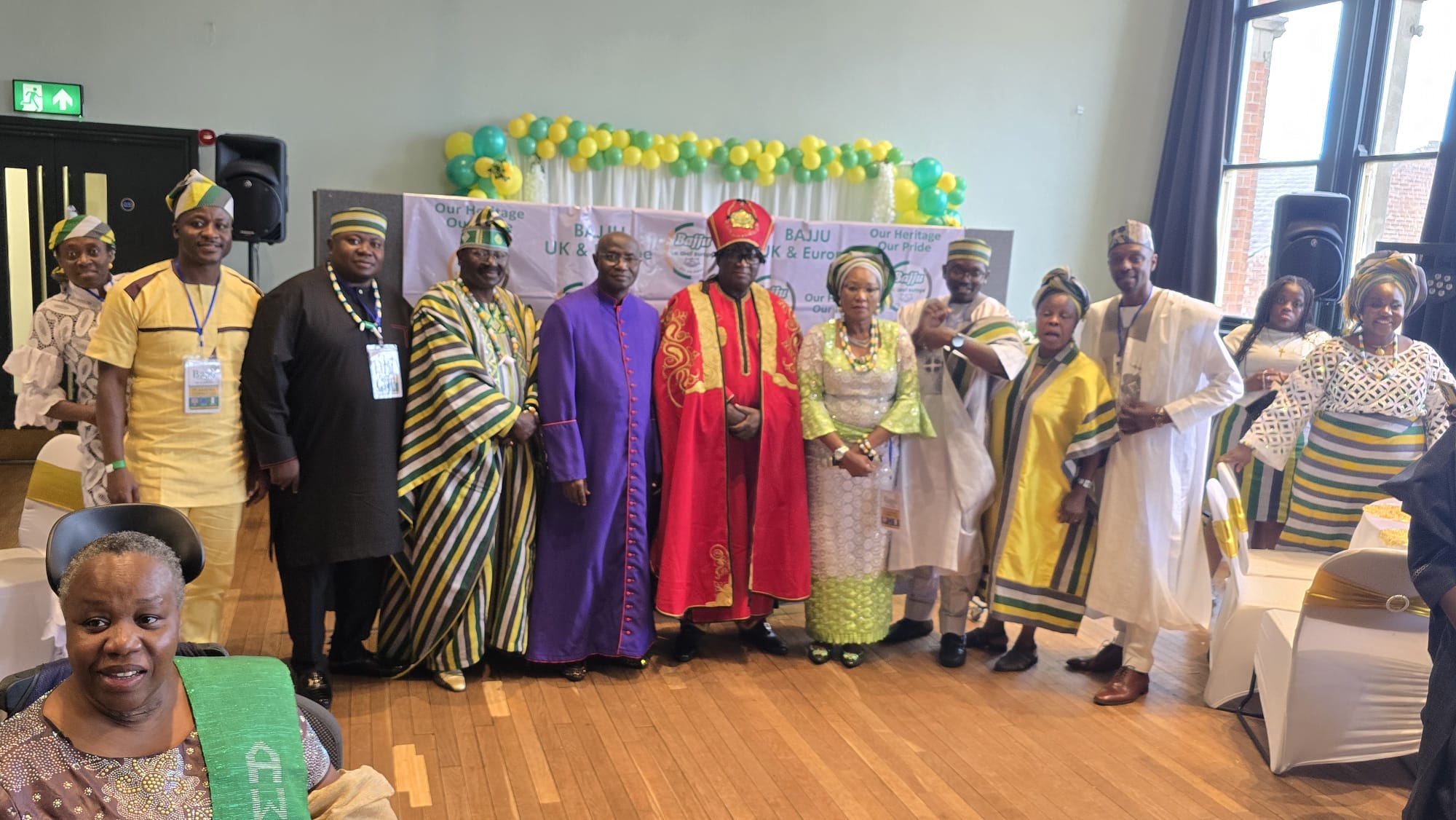
The Bajju community in the United Kingdom and Europe has formally launched an association aimed at strengthening cultural ties among its members in the diaspora and contributing to the development of communities in Southern Kaduna.
The Bajju UK and Europe Association was officially launched on Saturday, 8 August, at the Stretford Public Hall, Chester Road, Stretford, Manchester, with members and guests gathering to celebrate the new umbrella body.
The association, according to its leaders, is expected to provide a platform for Bajju people living across the UK and Europe to unite, preserve their cultural heritage and mobilise resources for development projects in their ancestral communities in Kaduna State.
Speaking at the event, the association’s president, Dr Nathaniel James, said the initiative grew out of the long-standing desire among Bajju people in the diaspora to have a broader organisation that could bring members together.
“Today we have actually met to inaugurate our association because it is new. We only came about it sometimes two years ago and today is the day that we are launching it as an association,” Mr James said.
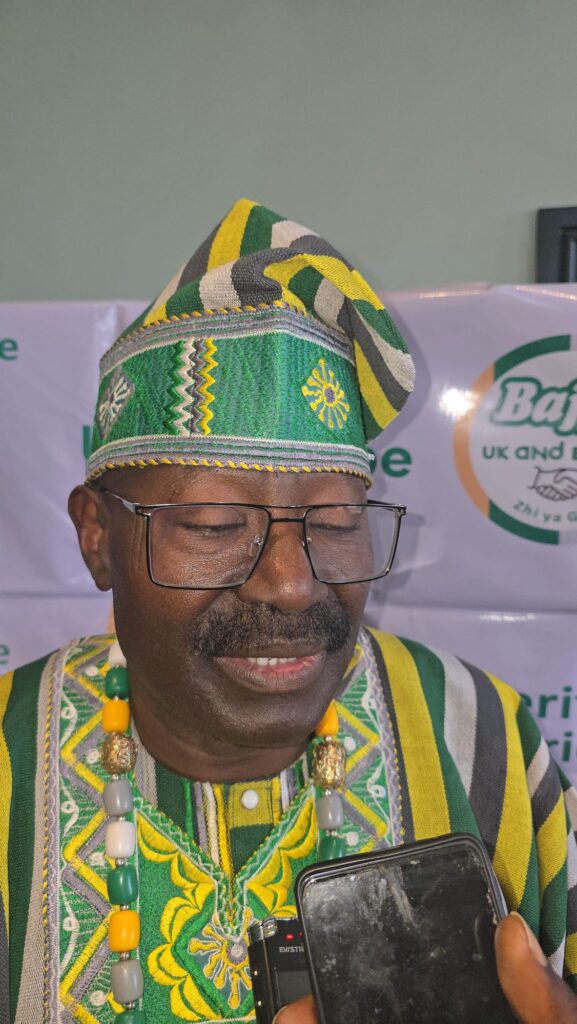
He explained that while Bajju people in Manchester had maintained an organised community for about two decades, there was a need to create a structure that would bring together Bajju people living beyond Manchester.
“Some of us have been living in this country for more than 40 years. And we actually have not really had an association as a people. But however, in Manchester, where I live, we’ve had, say, an association just for Buju Manchester. And we started this about 20 years ago, so the other Bujuk people decided, we want to be part of it.”
“Some actually want to be part of the Manchester one. We said, no, let’s do a global one. So we decided to put together the UK and Europe. So that is why we are here today.”
From Manchester meetings to a wider diaspora association
The journey to the new association dates back more than 20 years, when Bajju residents in Manchester began holding regular gatherings to maintain relationships and support one another.
According to the account of one of the community’s pioneers, the meetings evolved from informal visits between families into a more structured Zutundung gathering.
The initiative was also intended to ensure that younger members of the community would grow up knowing one another and understanding their heritage.
That early Manchester experience eventually became an inspiration for Bajju people elsewhere in the diaspora.
About two years before Saturday’s launch, members created a Bajju UK and Europe WhatsApp group. What started as a communication platform subsequently developed into a wider network and eventually led to discussions about creating a formal association.
Dr James said the association had already organised a smaller “meet and greet” event the previous year, but Saturday’s gathering marked a more formal step in its development.
Education, development agenda
Beyond cultural activities, the association has outlined a development agenda that includes education and support for less privileged children.
Dr James said one of its major plans is the establishment of an educational trust that will provide scholarships to children who need financial assistance.
“One of the things that we want to do is we want to establish an educational trust,” he said.
“Now, this is supposed to offer scholarship to less privileged children.”
He also identified the traditional institution and the construction of a palace for the Bajju traditional ruler as other areas of concern for the association.
Dr James said the community was seeking support for the ongoing palace project in Zonkwa and hoped to engage the Kaduna State Government over the matter.
“As of last year, it was supposed to be 800 million, but now, because of the cost of living, so it’s actually increasing. They’ve done the first decking, so they’re just building, you know. Now, so we are appealing because government usually, you know, assist and they have promised, but we’ve not seen it come to bear.”
The construction of a befitting palace for the Agwam Bajju has been a longstanding community project. A palace project committee announced the commencement of construction in 2021, noting that the Bajju Chiefdom had operated without an official traditional palace since its creation.
The traditional institution has also undergone changes in recent years. The late Agwam Bajju I, Nuhu Bature, became the first monarch of the chiefdom after its creation in 1995 and was elevated to first-class status in 2007. He died in December 2021.
The current paramount ruler is Luka Kogi Yabwat, Agwam Bajju II, who succeeded Mr Bature. He was identified as the paramount ruler of the Bajju Traditional Council in reports of a traditional title ceremony in Zonkwa in December 2025.
‘Government alone cannot do everything’
For Jumai Hamza, chairman of the planning committee for the launch, the association is primarily about turning the resources and expertise of Bajju people in the diaspora into practical development initiatives at home.
Mrs Hamza said the community could no longer rely solely on government to address all its development challenges.
“We want to advance. We want to develop. Government alone cannot do a lot of things for us. We have so many expertise amongst us in different spheres of the society. We have the know-how, and we’re just sitting down, not really doing a lot.”
“The world is moving very fast, And that is why we think we can’t be grumbling aside and waiting for government to come and do this and do that in our own little way.”
He said the association would begin with what it could achieve and seek government support where necessary.
“We will start and then we will project it and the government will see where we can’t go further and they will step in and help us. So this is just for the development and advancement of our people.”
Mrs Hamza said the focus was particularly on communities back home, where he said members continued to receive reports about difficulties affecting their relatives.
“Primarily it’s for the projects back at home because here, yes, to God be the glory, it’s not like the way it is at home so we can manage, but our people are really struggling and it beats us so badly when we speak to them and they’re crying, lack of farm, lack of fertilizer, lack of road, lack of schools and everything.”
She said the goal was to move beyond sending small amounts of money to relatives and instead support projects with longer-term impact.
“We sit down here, we say, no, we can’t sit down and fold hands and be sending them £10, £20 every now and then. So we need to do something more concrete. So that’s the reason why.”
Schools, roads, political participation
Mrs Hamza said the association would measure its success by the improvements it could help achieve in Bajju communities over the next few years.
“By the grace of God, we want to see that we are beyond where we are now, back home. We are ahead of where we are now.”
“So we want to see that our schools are in high standard. We want to see more science teachers. We want to see more good roads in our area. We want to see our people in government because we have the capacity to get there.”
He described the launch as a starting point for a broader mobilisation of the community.
“but this is a step up for us by the grace of God.”
Preserving the Jju language
For Mercy Maaji, the association’s treasurer, cultural preservation is one of its most important responsibilities.
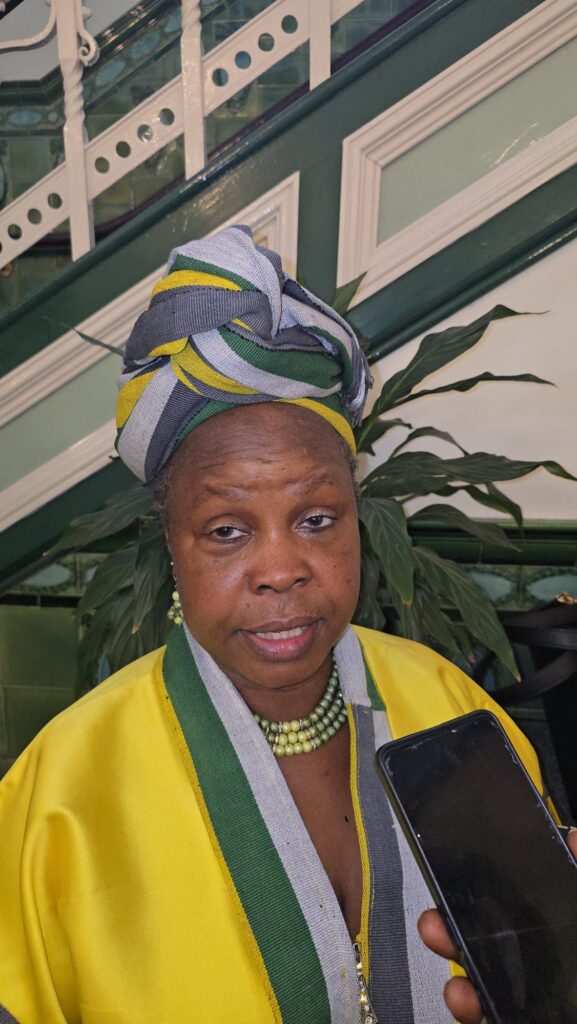
She said the association was particularly concerned about younger Bajju people in Europe who may grow up disconnected from their language and cultural identity.
“I am a Bajju by tribe from Southern Kaduna State. So we came to this occasion for the launching, and that is why we want to promote our people, even in Europe, because a lot of people are in Europe and they don’t know anything tribe.”
“And we want to promote our tribe. We don’t just want it to die just like that. And that is why the Bajju is our pride and our heritage.”
She said the association intended to encourage younger members to learn the Bajju language and understand their origins.
“Because this Gen Z now, they don’t want to speak the language and it’s dying. And we don’t want that to go down the drain.”
The Bajju people, also known as Kajju, are an ethnic group primarily associated with Southern Kaduna. Their indigenous language is Jju, and their traditional homeland is known as Kajju. They are found principally around Zangon Kataf and parts of Jema’a, Kachia and Kaduna South.
Zonkwa, the headquarters of Zangon Kataf Local Government Area, is also the headquarters of the Bajju Chiefdom and the seat of the paramount ruler.
Ms Maaji said maintaining the connection with home was particularly important for children born or raised outside Nigeria.
“So we want our children, even our great-grandchildren, to know about the language, to know that we exist to know that yes where they come from.”
She added that understanding one’s heritage could provide a sense of belonging even when circumstances required a person to relocate.
“if i were in uk there’s no guarantee because at the time that you say oh i want to go back home you know where you are coming from if you don’t even know where you are going to you should know where you are coming from.”
‘There is hope’
The speakers also urged younger Bajju people in Nigeria not to view migration as the only route to a better future.
Responding to what message he had for young people considering leaving Nigeria, Mrs Hamza said they should recognise the value of collective action and the opportunities available at home.
“there is hope it’s not always greener where you think it’s green but together we pull together so what we want to do is we tap into the young we tap into the wisdom of the old and we’ll come up with a very beautiful outing by the grace of god.”
Dr James similarly urged Bajju people to seek one another out and strengthen community networks.
“The advice would be to try and know your people and you should try and connect with brethren and let people know you.”
He said the association remained open to Bajju people who were yet to join, stressing that its aim was to build a larger and more connected community.
The launch therefore marked more than the creation of another diaspora organisation. For its organisers, it represents an attempt to connect generations, preserve a language and cultural identity, and channel the skills and resources of Bajju people in the UK and Europe towards practical development in their ancestral communities.
As the association begins its work, its leaders say the immediate challenge will be to turn the goodwill surrounding its launch into sustained programmes in education, infrastructure, cultural preservation and community development.

Ajadi Honours Akingbile-Oluana Community’s 5th Anniversary, Donates Funds on Behalf of APM Candidates

Atiku accuses Tinubu of deflecting blame for Nigeria’s economic hardship